
ID
1103188
$ 336.46
1-2 weeks delivery time
-
+
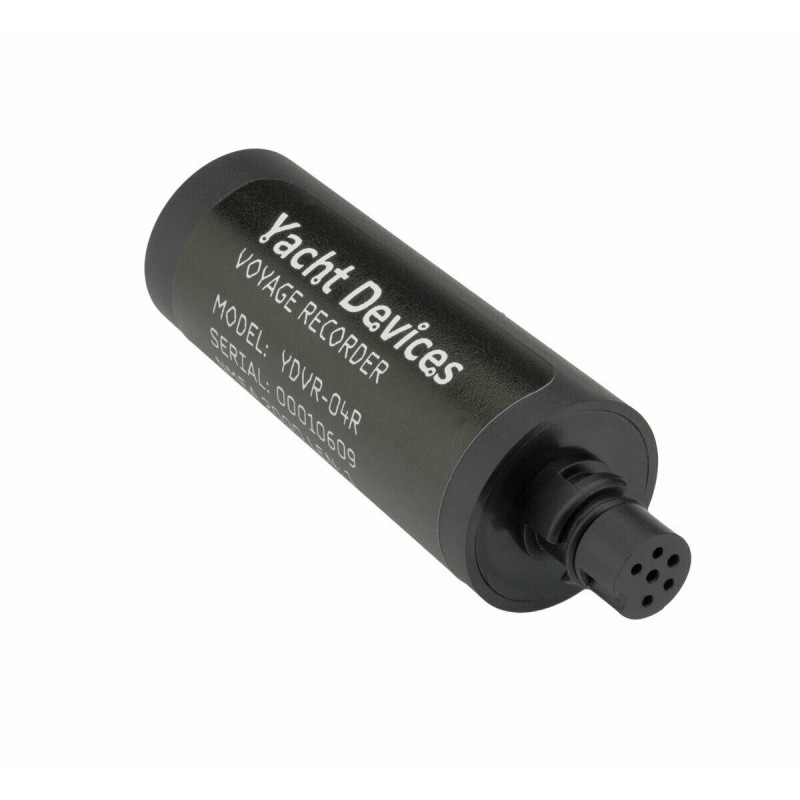
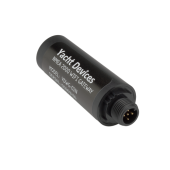
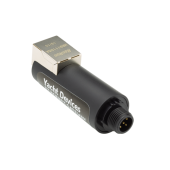
The Yacht Devices YDVR-04R is a marine voyage data recorder with a Raymarine SeaTalk NG-compatible connector, designed to continuously store NMEA 2000 network traffic on a MicroSD card, including position, course, speed, depth, water temperature, wind, AIS, engine, tank and battery data. It also provides an isolated audio input for recording VHF line-out, compatible low-power speaker output or amplified microphone audio to standard 12 kHz 16-bit mono WAV files, with programmable gain from -30 to +14 dB. The unit operates from 10.5–16 V, consumes 23 mA, provides 1500 VRMS galvanic isolation on the audio input, supports Class 10 MicroSD cards and operates from -25 to +85°C.
- Description
- Ask a Question
-
Yacht Devices YDVR-04R Voyage Recorder with SeaTalk NG Connector, MicroSD and VHF Audio Recording
The Yacht Devices YDVR-04R Voyage Recorder is designed to store data from a vessel’s NMEA 2000 network on a MicroSD memory card. It records network traffic without analyzing the data, allowing voyage information to be processed later on a computer for track reconstruction, diagnostics, logbook generation and technical analysis.
The YDVR-04R version is equipped with a connector compatible with Raymarine SeaTalk NG. Depending on the equipment installed on the vessel, recorded network information can include position, course, speed, depth, water temperature, log, wind speed and direction, AIS traffic, engine data, water and fuel tank information, battery voltage and other NMEA 2000 data.
Main Features
- Raymarine SeaTalk NG-compatible network connector
- Records NMEA 2000 network traffic to MicroSD card
- Supports navigation, weather, depth, AIS, engine, tank and battery data
- Audio input for VHF line-out, compatible speaker output or amplified microphone output
- Standard WAV audio recording
- Supports compressed and uncompressed audio
- Automatic deletion of oldest recordings when storage space is required
- DAT and CAN recording formats
- Player mode for replaying recorded CAN traffic back to the network
- Supports NMEA 2000 and other compatible CAN networks
- MicroSD-based configuration and firmware updates
- PC software support for Windows, macOS and Linux
Recorded Network Data
- Vessel position
- Course
- Speed
- Water depth
- Water temperature
- Log data
- Wind speed
- Wind direction
- AIS data from nearby vessels
- Engine data
- Water tank data
- Fuel tank data
- Battery voltage
- Other available NMEA 2000 messages
Electrical Specifications
Parameter Specification Operating voltage 10.5–16 V from NMEA 2000 network Average current consumption 23 mA Load Equivalency Number 1 LEN Operating temperature range -25 to +85°C Recommended MicroSD card class Class 10
Audio Input Specifications
Parameter Specification Audio input impedance 115 Ohm Maximum audio line-in voltage -15 to +15 V Minimum input level -200 to +200 mV Programmable audio gain -30 to +14 dB Galvanic isolation of audio input 1500 VRMS Audio format WAV Audio sampling 12 kHz, 16-bit, mono
VHF and Voice Recording
The YDVR-04R can record audio from a VHF line output, from the speaker output of compatible low-power VHF equipment, or from a microphone amplifier output. Recorded audio is stored in standard WAV files.
Audio files are linked internally with the corresponding voyage data, allowing recordings to be associated with specific positions and times. A microphone can also be connected through a suitable amplifier to use the recorder as a voice logbook.
Audio Recording Configuration
Setting Specification Audio recording ON / OFF Compression ON / OFF Gain range 0.03–5.00 Factory gain 2.70 Silence delay range 0.50–16000.00 s Factory silence delay 30.0 s Low-pass filter ON / OFF Activation threshold range 0–50% Factory activation threshold 2.50%
Storage Requirements
Recording Type Approximate Storage Use NMEA 2000 network data 1000–2500 bytes per second Compressed audio 0.35 MB per minute Uncompressed audio 1.4 MB per minute
According to the manufacturer, a 16 GB MicroSD card is typically sufficient for about 100 days of network data recording. The same capacity can hold up to approximately 32 days of continuously recorded compressed audio.
MicroSD Card Support
- MicroSD card required for normal operation
- Class 10 or faster recommended
- Supports MicroSD cards of any size and class, subject to performance requirements
- Supports FAT12, FAT16, MS-DOS FAT and FAT32
- exFAT and NTFS are not supported
- Recommended cluster size: 64 KB or maximum available
- Automatic folder and file management
- Automatic deletion of oldest recordings can be enabled
Recorded File Formats
Format Function DAT Default format for NMEA 2000 voyage recording CAN CAN bus recording format for diagnostics, playback and other CAN networks WAV Audio recording format
CAN Network Support
When CAN recording format is selected, the recorder supports configurable CAN bus speeds from 50 kbps to 1 Mbps.
CAN Bus Speed Supported 50 kbps Yes 125 kbps Yes 250 kbps Yes 500 kbps Yes 1 Mbps Yes Automatic speed detection Yes
NMEA 2000 and J1939 use 250 kbps. The recorder is also compatible with other CAN networks operating at supported speeds, including J1939 and Volvo Penta EVC applications.
Data Filtering
- AIS recording can be enabled or disabled
- Selected PGNs can be excluded from recording
- Messages from selected device addresses can be blocked
- Specific message identifiers can be filtered
- Silent mode can suppress outgoing device information
Player Mode
Player mode allows recorded CAN files to be replayed onto a physical CAN network for demonstration, testing or development purposes.
- Supports PLAYNOW.CAN and PLAY.CAN files
- Supports 11-bit and 29-bit CAN messages
- Supports data lengths from 1 to 8 bytes
- Can replay recorded message timing
- Optional loop playback
PC Data Processing
Recorded files can be processed with Yacht Devices software on Microsoft Windows, macOS and Linux.
- GPX vessel track generation
- CSV spreadsheet export
- Editable and printable voyage logbook generation
- Export of extended voyage data including weather, depth, engine and AIS information
- CAN file viewing, conversion and playback
Installation
The YDVR-04R connects directly to the SeaTalk NG / NMEA 2000 network backbone without a drop cable. The device should be installed in a dry location and the network power should be switched off before connection.
- Direct backbone connection supported
- Dry mounting location required
- Connector lock should be secured after installation
- MicroSD card required for recording operation
Package Contents
- YDVR-04R Voyage Recorder – 1 pc.
- User Manual – 1 pc.
MicroSD card with adapter, audio cable and NMEA 2000 drop cable are not supplied.
Product Identification
Parameter Specification Brand Yacht Devices MPN YDVR-04R EAN 4779045210410 -
Popular products
-
 1-2 weeks delivery time$ 336.46
 -
 1-2 weeks delivery time$ 336.46
 -
 1-2 weeks delivery time
 -
 1-2 weeks delivery time$ 289.89
 -
 1-2 weeks delivery time$ 289.89
 -
-
-
-
 1-2 weeks delivery time$ 406.31
 -