


ID
1351267
1-2 weeks delivery time
Our managers will contact you and clarify the terms of the order
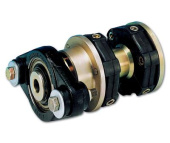
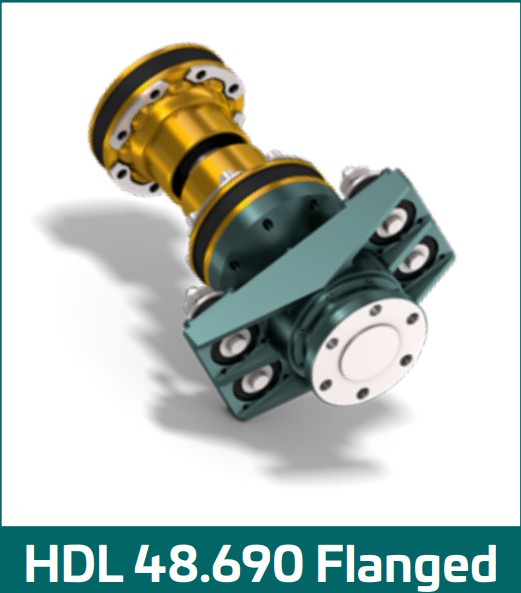
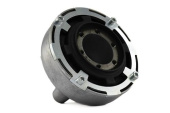
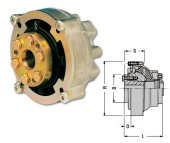
The Aquadrive HDL48.690 Flanged Heavy Duty Line system is a high-capacity marine propulsion anti-vibration system with integrated thrust bearing and flanged shaft connection. Designed for powerful propulsion installations, it isolates engine vibration while transferring propeller thrust directly to the vessel structure. Maximum torque 12,240 Nm, maximum shaft speed 1700 rpm, and maximum propeller thrust 40 kN.
- Description
- Ask a Question
-
Aquadrive HDL48.690 Flanged – Heavy Duty Line Anti-Vibration Thrust Bearing System, Max Torque 12240 Nm
The Aquadrive HDL48.690 Flanged is a Heavy Duty Line propulsion antivibration system designed to eliminate the transfer of propeller thrust and drivetrain vibrations from the propulsion shaft to the engine and vessel hull. By integrating a thrust bearing housing with a constant velocity (CV) joint, the system allows the engine to move freely on flexible mounts while the propeller thrust forces are absorbed by the Aquadrive unit mounted to the vessel structure.
This configuration reduces structural vibration and noise, improves onboard comfort, and simplifies engine alignment during installation. The system uses the CV48 constant velocity joint and a flanged output connection, making it suitable for marine propulsion systems operating under high torque and thrust loads.
Key Features
- Heavy Duty Line anti-vibration propulsion system
- Flanged thrust bearing housing for propulsion shaft connection
- Uses CV48 constant velocity joint
- Isolates engine from propeller thrust loads
- Reduces vibration and noise transmitted to the hull
- Allows flexible engine movement on resilient mounts
- Simplifies propulsion system alignment
Technical Specifications
Model HDL48.690 Flanged CV Joint Type CV48 Maximum Static Torque 12240 Nm (9060 lbft) Maximum Propeller Shaft Speed 1700 rpm Maximum Propeller Thrust 40 kN (9000 lbf)
Driveshaft Information
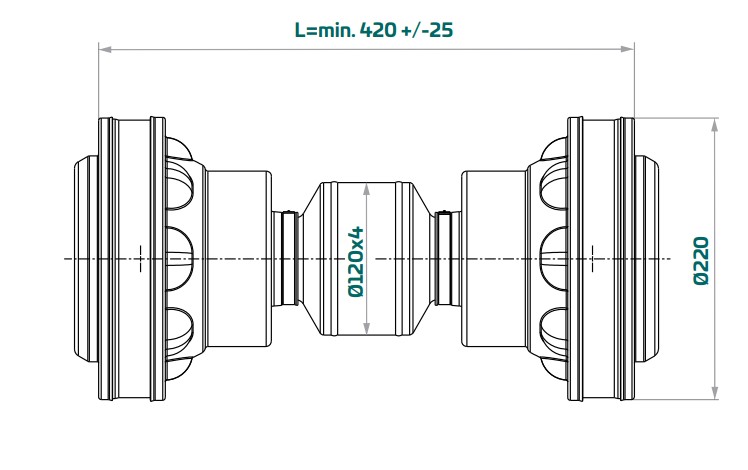
- Custom-length CV48 driveshaft available
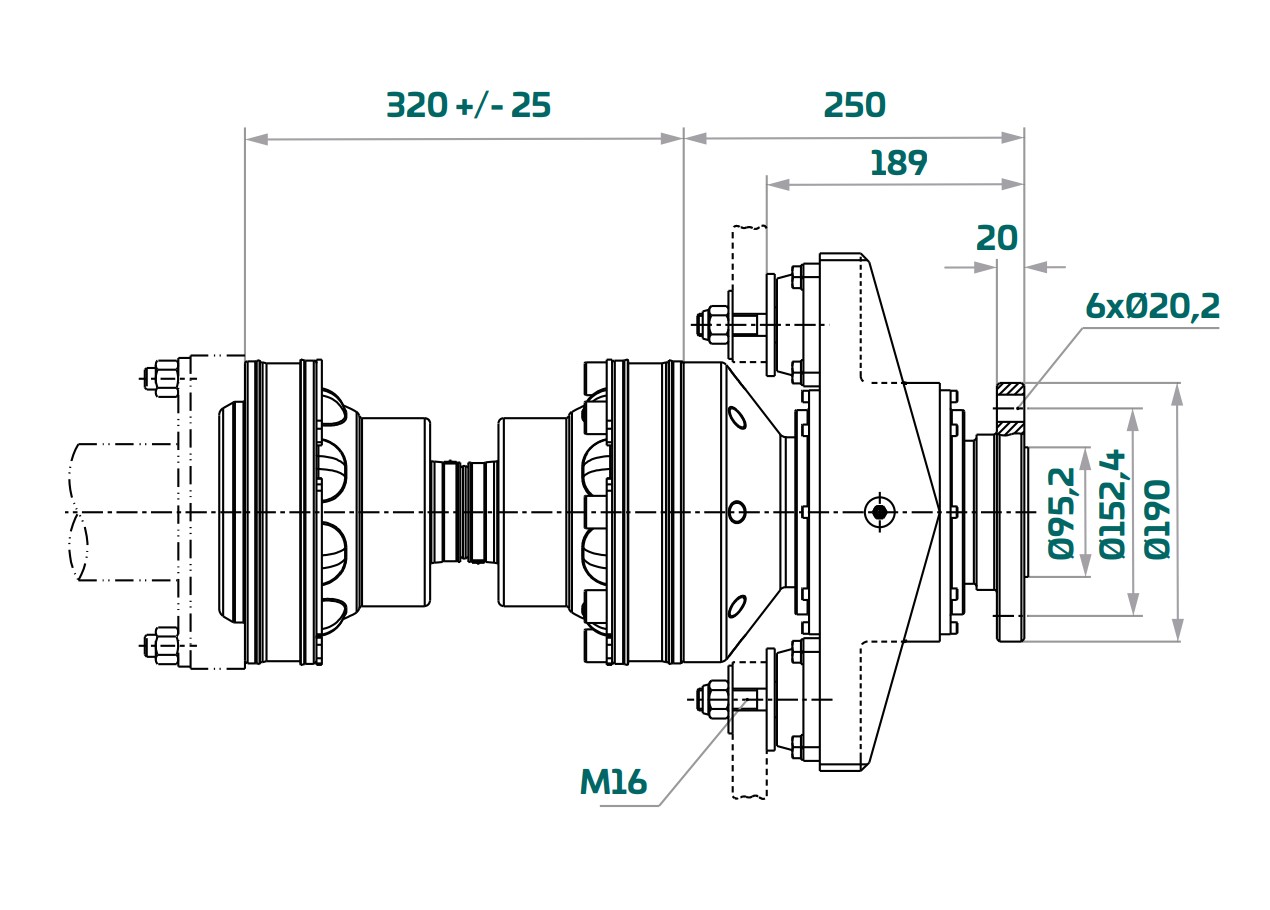
- Minimum driveshaft length: 320 mm
- Minimum length with tube shaft design: 420 mm
- Maximum length depends on shaft rpm
Application Examples
Boat Type Rated Power Crankshaft RPM Gearbox Ratio Displacement boat 410 kW (550 HP) 2100 rpm 3 : 1 Planing boat 670 kW (900 HP) 2800 rpm 2 : 1
Compatible Propeller Shaft Sizes
- 50 mm
- 2"
- 2¼"
- 60 mm
- 2½"
- 65 mm
- 70 mm
Notes
- Rated power values are based on optimum conditions with a 2° angle for each CV joint.
- If the CV joint operates at an angle greater than 2°, the maximum permitted power must be reduced.
- Typical reduction is approximately 8–9% for each additional degree over 2°.
- The maximum allowable joint angle is approximately 5–8° depending on shaft rpm.
-
Popular products
-
 1-2 weeks delivery time
 -
-
 1-2 weeks delivery time
 -
-
 1-2 weeks delivery time
 -
 1-2 weeks delivery time
 -
 1-2 weeks delivery time
 -
-
-