

In every boater’s life there comes a moment when hauling lines by hand feels like a chore rather than a joy. You glance at your deck, at that sturdy Lewmar manual winch, and wonder: could I upgrade my manual winch into something that works at the push of a button? That question echoes across many a boat install forum where seasoned sailors and rookies alike debate the merits of a Lewmar electric winch conversion.The idea of converting a manual winch to electric is no longer science fiction — Lewmar themselves offer an Ocean winch electric conversion kit and even an EVO electric winch kit, which show that this transformation is feasible for certain models.
But it’s not a one-size-fits-all affair: wiring, marine gearbox alignment, electrical upgrade constraints, battery capacity, and compatibility with the existing winch housing all play a role.
You’ll often see on the forum Lewmar electric winch threads sailors asking whether their specific model can be retrofitted, or if a complete new winch is the only route.In this article, we’ll explore: which Lewmar models can realistically undergo a Lewmar electric winch conversion, which ones are better left manual, and what it takes — wiring, motor choices, mechanical compatibility — to make that switch. By the end, you’ll have a clearer sense whether your winch needs a complete overhaul or just a clever upgrade to electric.
Understanding Lewmar Winches and Electric Conversion
Lewmar winches have long been trusted companions for sailors who value precision and strength on deck. The Lewmar Ocean winches line, known for its durability, often becomes the foundation for upgrades that make handling sails smoother. Many skippers consider converting their cable winch to an electric model when they’re ready for easier control and less manual effort. Electric conversion transforms your sailing experience, making every tack and trim feel seamless rather than strenuous.
What is a Lewmar winch and how it works
A Lewmar winch is the quiet powerhouse sitting on your deck, turning human effort into smooth sail control. Its job is to take the strain off your hands when trimming or hoisting the mainsail. The Lewmar Ocean winches use gears and a handle to multiply your pulling force, allowing you to manage sheets and halyards with precision. Inside, stainless gears work with bronze drums to ensure durability and consistent performance.
The winch relies on a self-tailing system that grips the line, freeing up your hands for steering or other deck tasks. Many sailors later choose to install upgrades or convert their cable winch to an electric model for even easier operation. A Lewmar winch is the sailor’s mechanical muscle, built for reliability and finesse in every tack.
Self-tailing vs two-speed winches
Self-tailing and two-speed winches serve the same purpose but feel very different in action. The difference lies in control and efficiency.
Key distinctions:
- Self-tailing winches hold the rope automatically, leaving your hands free.
- Two-speed winches allow you to shift between fast and slow gear ratios.
- Self-tailing systems reduce crew workload on longer voyages.
- Two-speed versions give extra torque when hauling in heavy loads.
- Both styles are often found in Lewmar Ocean winches and can be upgraded for electric use later.
The role of winch handles in manual operation
| Feature | Description | Function on Deck | Sailor’s Tip |
|---|---|---|---|
| Handle length | Typically 8 to 10 inches | Increases leverage and control | Choose a size that suits your strength |
| Grip design | Rubberized or ergonomic | Provides comfort during high load turns | Keep it clean from salt and grease |
| Locking mechanism | Button or spring type | Secures handle to the winch socket | Check for corrosion before use |
| Material | Stainless steel or composite | Withstands marine weather | Rinse after each sail to prevent wear |
| Backup handle | Spare kept on board | Ensures continued operation | Store in a dry, easy-to-reach spot |
The Basics of Electric Winch Conversion
At its heart, converting to electric means adding power to what’s already there — the sturdy mechanics of a manual winch combined with a reliable motor. When you install the new system, it usually involves mounting the motor beneath the deck and connecting it through a safe electrical setup. Sailors appreciate how a well-fitted self tailing bolt two speed design can handle both precision and load effortlessly. A well-done conversion brings control and ease, making hard work feel almost effortless.
What is an electric winch conversion kit
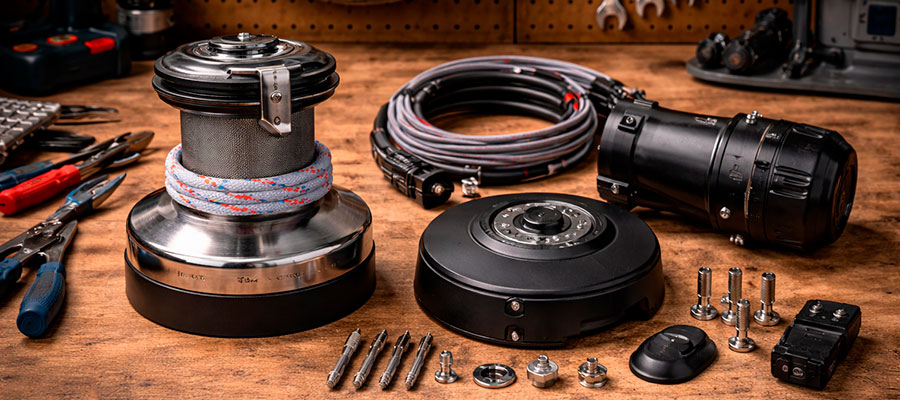
An electric winch conversion kit is designed to give your existing manual winch a second life. It transforms manual power into electric precision with the help of marine-grade components.
What most kits include:
- Electric motor and gearbox assembly
- Top cap with drive housing
- Electrical wiring harness and switch
- Mounting brackets and hardware
-
Installation guide for a safe install process
How to convert a winch to electric
| Step | Action | Description | Tip |
|---|---|---|---|
| 1 | Remove manual handle | Detach the existing handle socket | Keep parts organized for reuse |
| 2 | Mount motor and gearbox | Fit them beneath or beside the winch | Ensure they align with the drum gears |
| 3 | Connect wiring | Attach power cables to the electrical system | Use marine-grade wiring for safety |
| 4 | Install control switch | Place on deck or near helm | Test for smooth activation and stop response |
| 5 | Secure bolts and fittings | Tighten all hardware with care | Avoid over-tightening to protect threads |
| 6 | Test the winch | Operate under low load | Listen for vibration or irregular sound |
Benefits of an electric winch upgrade
Upgrading to an electric winch brings convenience, speed, and comfort to every sail. With a single press of a button, you can raise, trim, or furl sails smoothly, even under high load. Electric power turns effort into precision, making sailing more enjoyable and less demanding. This upgrade is ideal for smaller crews or older sailors who want to preserve energy for longer journeys.
Lewmar’s electric models offer quiet operation, reliable performance, and improved control in changing wind conditions. By reducing manual strain, it also minimizes the risk of injury and improves overall sailing efficiency. Once installed, it transforms every hoist into a seamless experience.
Compatibility of Lewmar Winches with Conversion Kits
Not every Lewmar winch is made for a plug-and-play upgrade, and that’s part of the charm and challenge. Older Lewmar Ocean winches may need adaptation before they can take on an electric motor, while newer EVO lines are often ready for an easy fit. Checking model numbers and gearbox sizes helps ensure your winch needs align with the right conversion kit. Matching the right kit to your winch is what keeps the system running smoothly under sail.
Lewmar Evo and Evo Electric models
Lewmar’s Evo series takes the trusted Ocean line and refines it for modern sailing. They combine performance with smart technology.
Notable features:
- Polished aluminum or chrome finish with durable construction
- Easy fit for self-tailing setups
- Optional electric conversion compatibility
- Smooth two-speed operation
- Ideal for both racing and cruising sailboats
Factors that determine winch convertibility
Not every Lewmar model is ready for an electric upgrade, and that’s where compatibility matters. Convertibility depends on structure, size, and design fit.
Key determining factors:
- The base design of your current winc
- Space available beneath the deck for motor placement
- Power supply and electrical wiring capacity
- Availability of matching conversion kits
- Type of self tailing bolt used in assembly
Sailboat winches: limitations and possibilities
Sailboat winches are built to endure, but every design has its limits. As sails get larger and loads increase, manual systems can become physically demanding. Upgrading to an electric solution expands what one sailor can manage alone. Even older Lewmar Ocean winches can be adapted with patience and the right kit.
There are still mechanical limits based on drum size and internal gearing, but modern kits account for that. The key is knowing your winch needs before starting the conversion. Understanding your winch’s limits unlocks new possibilities for comfort and control under sail.

Types of Lewmar Electric Conversion Kits
Lewmar offers several paths to electrify your deck, depending on what you already own. Some kits are designed for compact setups, while others work best with heavy-duty Lewmar Ocean models that handle bigger sails. Whether you choose a two speed or a single-speed option, each new winch kit is built with marine-grade components for long life and consistent power. Each kit offers a tailored upgrade, allowing sailors to find the perfect balance between strength and simplicity.
Electric conversion kits for self-tailing winches
Self-tailing winches are ideal candidates for electric conversion. They already manage rope tension effectively.
Common kit options:
- Lewmar Ocean conversion kit
- Lewmar Evo electric conversion kit
- Compact motor units for limited deck space
- Two-speed electric kits for heavy loads
- Marine-grade wiring sets for corrosion resistance
Conversion kit components: motor, top cap, and more
Every conversion kit comes as a complete solution rather than a single part. Inside, you’ll find the mechanical heart and electrical brain that bring your winch to life. The motor provides torque, while the gearbox ensures smooth control. The top cap and drive unit link it all to your existing winch drum. Many kits also include seals and covers to protect against water ingress. Having everything in one box simplifies your install and ensures every bolt aligns properly. Each component works in harmony to electrify your deck, creating power you can trust.
Comparing Lewmar conversion kits to Harken kits
Lewmar and Harken both produce high-quality winch conversion systems, but they differ in engineering and installation style. Lewmar focuses on modularity and easier retrofitting for older models. Harken kits often feature more complex mounting but higher motor output.
- Lewmar kits fit most Ocean and Evo winches.
- Harken options suit performance yachts.
- Choose based on available space and power needs.
Installation Process for an Electric Winch Conversion
Installing an electric conversion isn’t just a mechanical task — it’s a little piece of engineering art. The process starts by removing the old handle system, aligning the motor, and securing every bolt and bracket beneath the deck. Then comes wiring, battery connection, and final testing to ensure smooth operation. Proper install ensures lasting performance, keeping your winch reliable through every season on the water.
Preparing your Lewmar winch for electric upgrade
Before diving into an electric upgrade, preparation is everything. The process involves cleaning, inspecting, and ensuring every part moves freely. Start by removing salt buildup and lubricating gears with marine-safe grease. Then check your two speed or self-tailing mechanism for wear. Inspect mounting bolts, and confirm the deck surface can handle added motor weight. Lastly, verify your electrical wiring and battery setup meet conversion requirements. Preparation ensures your upgrade goes smoothly, saving time and avoiding mid-install surprises.
Step-by-step winch to electric conversion process
Converting a manual winch to an electric one takes patience but pays off in performance. Start by removing the manual handle and base cover, then attach the motor and gearbox beneath. Follow the manufacturer’s wiring and bolt pattern carefully for best results. Connect the electrical lines to the control switch and test the system at low power. Once everything runs smoothly, reinstall the top cap and test under load. Always ensure the gearbox alignment is precise to prevent uneven wear on gears.
Safety and maintenance after installation
After installation, regular inspection is essential to keep your electric winch running efficiently. Check for loose bolts, corroded connections, or worn bearings. Routine maintenance prevents electrical faults and ensures steady performance. Keep all components clean and dry, especially around the wiring and motor housing. Using marine grease on exposed fittings can help reduce wear from salt and moisture. Always disconnect power before servicing or cleaning the winch to avoid injury.
Advantages and Considerations of Electric Lewmar Winches
Switching to electric offers comfort, speed, and safety when handling sails solo or with a small crew. However, every electrical upgrade requires careful thought about power draw, maintenance, and long-term use in marine conditions. The freedom of pushing a button instead of cranking a handle can’t be overstated. Electric winches redefine sailing comfort, bringing effortless control to even the toughest maneuvers.
Increased efficiency in sail handling
Electric winches greatly enhance a sailor’s ability to manage sails quickly and effortlessly. With just a button press, trimming large sails or raising a halyard becomes much easier. This efficiency saves time and energy, especially during long passages. The smooth, consistent torque of the motor also improves accuracy when adjusting sails. Combined with a self-tailing design, this setup provides maximum control in any sailing condition.
Motor performance in ocean sailing
Ocean conditions can test any electrical system, but Lewmar motors are built to withstand them. They are sealed against moisture, corrosion, and vibration. Strong torque output ensures reliable performance even in rough seas. These motors maintain smooth operation under load, making them perfect for long-distance cruising or racing. Regular cleaning and inspection keep the motor performing at its best.
Cost vs benefit of electric conversion
Upgrading a manual winch involves more than just parts — it’s an investment in comfort and longevity. Sailors often weigh the expense against reduced strain and faster handling. The long-term benefit shows in smoother sailing, safer deck work, and increased vessel value. Over time, fewer maintenance hours often offset the initial cost of the new winch kit. And when handled properly, the motor and electrical components last for years without issue. The true value lies in effortless control, making every voyage smoother, safer, and more enjoyable.

