
When choosing a good device for fresh water in RVs or boats, it's important to think about its ability to start working on its own. Many people wonder if these units can begin pumping without needing someone to help manually. The ability to create suction automatically makes these devices easier to use and helps keep the system safe. They are made from strong materials that let them run safely even when there's no water and help them last longer. These units come in both 12-volt DC and regular household power versions, offering a steady flow and pressure. Knowing about their self-starting feature helps users pick the best one for their needs. This article explains how these devices work with priming and how well they perform.
Introduction to Flojet Water Pumps
Flojet water pumps are often used in both mobile and stationary setups. These pumps are popular in RVs, boats, and small businesses. They are small, strong, and use an electric motor to operate. Most of these pumps work on either 12 volts or 115 volts. Each Flojet pump is made to work well and be easy to use. Their automatic features help make everyday tasks easier for most people. Whether you're moving water from a holding tank or a barrel, these pumps get the job done. They are relied on by both home users and professionals.
Overview of Flojet Pump Technology
Flojet employs advanced diaphragm pump designs in its systems, enabling consistent flow and strong suction lift. Most units offer self-priming functionality for user convenience. The quad diaphragm pump, powered by an electric motor, is capable of handling both air and liquid without losing pressure.
The experiment highlights the use of various methods for efficient water drawing.
A built-in check valve prevents backflow into the inlet line. The pressure switch activates automatic water delivery when taps are opened. Internal components such as the santoprene diaphragm are resistant to wear and chemicals, ensuring reliable performance in demanding environments. Overall, this pump powered by an electric motor delivers dependable operation in various settings.
Common Uses in RV Water Systems and Car Wash Setups
A Flojet water pump is essential in many mobile water systems. In RVs, it pushes water from the tank to all faucets. In car wash setups, it feeds high-pressure sprayers with fresh water. Their compact size fits into tight compartments and under sinks. They’re often selected for their quiet operation and steady pressure.
Popular uses for a Flojet pump:
- RV water pump for sinks, toilets, and showers
- Car wash pump system for foam guns or rinse tools
- Portable water tank systems for outdoor sinks
- Food truck fresh water systems
- Marine washdown or bilge water removal
Benefits of a Self-Priming Pump Design
Self-priming means the pump can move air and start suction. This eliminates the need to fill lines manually before use. It also allows the pump to prime without water in the inlet. You can mount the pump above the water tank in many cases. Self-priming helps prevent damage from dry starts.
Advantages of a self-priming pump:
- Starts without manual priming or water prefill
- Easier installation in high or awkward locations
- Reduces risk of dry run damage
- Works well with flexible water tank setups
- Simplifies RV water system pump replacements
Understanding Self-Priming in Flojet Pumps
A Flojet water pump is designed for both convenience and reliability. One key feature is its ability to self prime easily. This means no manual filling or bleeding is required. It creates suction even when the lines are dry. The pump’s self-priming ability saves time and prevents frustration. This matters in RV setups where quick use is needed. Marine users also appreciate this when pulling water from tanks. It’s one reason flojet's pumps remain popular in tight system designs.
What Self-Priming Means for a Water Pump
Self-priming lets a pump powered by an electric motor pull fluid up. The pump body can handle air until liquid reaches the inlet.
This makes a self priming pump ideal for variable tank levels.
Many systems place the pump above the water tank, not below it. Air in the lines won’t stop the fresh water pump from working. Models like the 12v dc quad diaphragm pump recover easily after dry runs. The internal check valve keeps flow steady during start-stop cycles. These pumps can handle up to 45 psi without losing pressure. It’s all possible due to clever use of flexible santoprene diaphragm material.
How Flojet Pumps Handle Inlet and Valve Operation
Flojet pumps manage water using strong suction and smart valve systems. The diaphragm creates pressure and moves fluid through each port. A built-in check valve prevents reverse flow at the inlet. That keeps the water moving in the right direction always. The pump's internal layout works even in bumpy RV rides.
Key inlet and valve functions:
- Seals pressure with flexible diaphragm motion
- Prevents backflow through the check valve
- Allows air to exit without losing water flow
- Keeps suction even at low flow rate levels
- Connects easily to standard port fittings
Advantages of Self-Priming for RV and Marine Applications
Self-priming helps RV users avoid water flow delays. You can place the rv water pump above the holding tank. Self-priming makes marine or RV setups simpler and faster. If the tank runs dry, the pump won’t be damaged. That’s helpful when using tanks with variable water pressure.
Top benefits in mobile water systems:
- No priming required after storage or tank refill
- Handles air pockets during tank transitions
- Simplifies setup with flexible pump placement
- Supports dry starts without damage
- Ideal for 12 volt and 115 volt pump systems
Performance Specifications of Flojet Pumps
Flojet pumps are known for their reliability in compact systems. They deliver solid flow and steady pressure in different setups. These units suit mobile homes, boats, and small commercial rigs. Most models operate within a 30 psi to 60 psi range. That’s enough to power faucets, sprayers, and filtration lines. The durable pump body resists vibration and shock from vehicle movement. Many include a pressure switch to regulate automatic water flow. Overall, Flojet pumps offer a reliable mix of power and control.
Typical Flow Rates: 3 GPM and Other Options
Flow rates can vary depending on your setup or application. Popular models like the 2.9 gpm or 3 gpm are most common. Higher flow rates may reach up to 4 gpm in select versions.
The 3 gpm model fits most rv water pump needs well.
Flow is smooth and steady, even during multi-outlet use. Lower flow models, like 1.0 gpm, work for drip or misting. Choose the right flow rate for system pressure and tank size. Keep in mind, more GPM usually uses more battery power. Balance flow with psi for best long-term results.
PSI Ratings and Their Impact on Water System Pressure
| PSI Rating (Pressure) | Water System Impact | Suitable Applications | Notes on Duplex/Double Diaphragm Pumps |
|---|---|---|---|
| 15-25 PSI | Gentle pressure, ideal for delicate fixtures | Small RV sinks, low-demand systems | Double diaphragm pumps handle low PSI without cycling |
| 30-45 PSI | Balanced pressure for everyday use | Typical RV showers, marine faucets | Duplex diaphragm pumps excel at consistent mid-range PSI |
| 50-60 PSI | Strong pressure, supports multiple outlets | Larger boats, multi-point water systems | Double diaphragm design prevents pressure drops under load |
| Above 60 PSI | High pressure, risk of system strain | Specialized or industrial setups | Requires robust duplex diaphragm pump to avoid damage |
Powering with 12V, 12 VDC, or DC Water Configurations
Flojet pumps are easy to power in off-grid systems. The 12v dc and 12 vdc models suit RV and marine setups. They run off standard deep-cycle batteries or inverter systems. A 12 volt line powers the motor and pressure switch. DC power gives you flexibility when off the grid or mobile.
Common DC water power options:
- 12v setup from RV or boat battery bank
- 115v vac adapter for home or station use
- Dual input units with 12 v and 115 volt support
- Great for dry camping, boating, or car wash rigs
- Works with solar systems and backup DC generators
Applications of Flojet Self-Priming Pumps
Flojet pumps are used in many water-based systems today. Their self-priming ability makes installation flexible and maintenance easier. From RV setups to commercial systems, these pumps perform well. Self priming reduces hassle during setup and restarts in every use. Users don’t need to manually prime the line or pump head. These pumps work well even when mounted above the water tank. That’s perfect for RVs, boats, and compact utility trailers. Their compact design fits easily into tight spaces and enclosures.
Using a Flojet Pump in an RV Water Pump System
In RVs, a Flojet pump supports full water system operation. It delivers pressurized flow to faucets, toilets, and showers. The pump pulls water from the holding tank using suction.
Its 12v dc motor handles regular cycles without overheating.
With a quad diaphragm pump, it can run dry without harm. The pressure switch starts the pump when water pressure drops. Polypropylene fittings make installation simple and secure. These units maintain around 45 psi in most RV systems. Regular use demands a pump that’s durable and self-priming.
Car Wash and Kleen-Rite Water System Installations
Flojet’s strong performance makes it ideal for car wash systems. These units are commonly used by pros and DIY washers. Self-priming ability ensures water delivery, even after dry runs. That’s critical in mobile setups where tanks often run low. Systems like Kleen-Rite benefit from the pump’s durable parts.
Common car wash uses:
- Feeding pre-soak or rinse sprayers
- Supplying foam guns or detailing tools
- Moving water from external tanks to wash bays
- Pressurizing spray bottle fill stations
- Running clean water through small-scale RO systems
Marine and Household Uses for Self-Priming Pumps
Marine and home users benefit from the same smart design. Boats use them for showers, sinks, and washdown stations. Self-priming pumps reduce installation time and avoid flow loss. They’re also popular in off-grid homes using tank-fed systems. A duplex diaphragm pump can maintain flow at low volt levels.
Key marine and household uses:
- Pumping freshwater in sailboats or cabin cruisers
- Supplying pressurized water to tiny house sinks
- Boosting water pressure in gravity-fed cabins
- Running filtration loops in emergency setups
- Operating rainwater catchment systems with minimal pressure
Troubleshooting and Maintenance
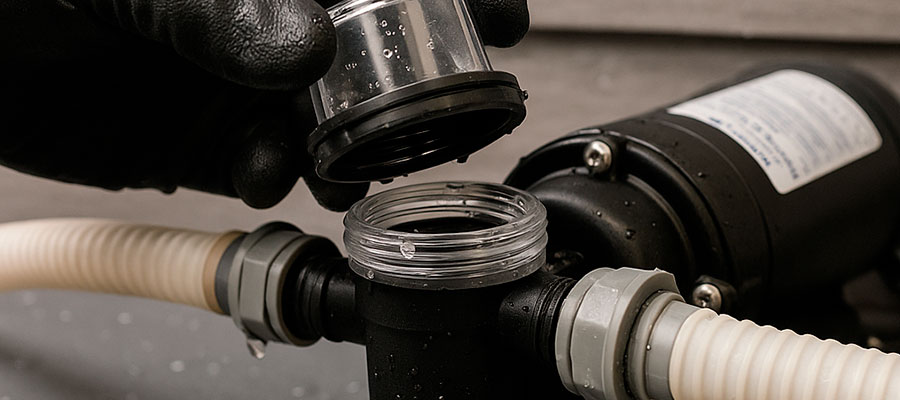
Flojet water pumps are durable, but they still need attention. Over time, wear or buildup can affect pressure or flow rate. Check for leaks or loose fittings during regular inspections. A drop in psi may signal internal blockage or air leaks. Cleaning the filter can quickly restore normal operation. Flush your water system pump regularly to remove debris and residue. Look for signs of wear on valves, diaphragms, or seals. Timely care can help avoid costly breakdowns or mid-trip failures.
Diagnosing Valve or Inlet Issues in a Flojet Pump
Valves control pressure and direction inside your Flojet pump. The inlet must remain clear for smooth suction and flow. If the flow rate drops, inspect these areas first.
A faulty check valve can allow backflow or air leaks.
Look for stuck valve flaps or cracks in the pump body. Make sure your port fittings are sealed tight with no gaps. Replace worn santoprene diaphragm parts during routine maintenance. Diaphragm pump designs depend on flexible, clean valve seals. Always isolate the problem before replacing the entire pump system.
Fixing Low GPM or Inconsistent PSI Output
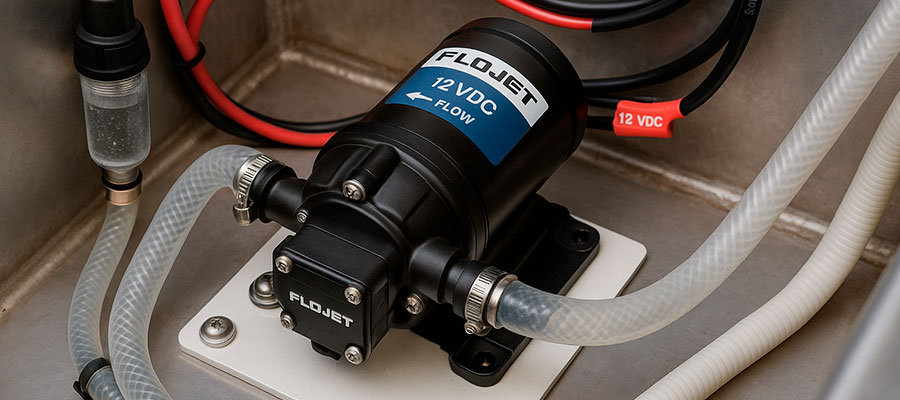
If your Flojet water pump loses power or flow, act fast. Most problems come from clogged lines, blocked inlets, or leaks. Low gpm can also mean a weak or broken pressure switch. A full check-up of the water system pump may be needed. Always power off before disassembling any 12v dc connections.
Fixes to consider for low flow or pressure:
- Clean or replace the inline inlet screen filter
- Inspect the check valve and diaphragm for debris
- Test the pressure switch for proper start/stop function
- Examine tubing for kinks, holes, or poor fittings
- Check voltage at the terminals of the 12 volt line
Tips for Extending the Life of Your Flojet Water Pump
Regular upkeep will keep your pump running for years. A clean system reduces strain on the pump head and diaphragm. Avoid dry runs to protect the self-priming ability long-term. Replace worn fittings or seals before full failure occurs. Monitor psi regularly for early signs of pressure imbalance.
Top ways to prolong pump performance:
- Flush water lines between uses to prevent buildup
- Store your rv water pump dry in freezing weather
- Use only approved polypropylene or chemical-resistant parts
- Replace the santoprene diaphragm every 1–2 seasons
- Test your automatic water shut-off system monthly
Are Flojet Pumps Worth It?
Flojet pumps offer real value for portable and fixed systems. They include models like flojet quad and triplex, designed for steady output. Some come with a self-priming duplex diaphragm for smoother flow. Flojet’s self-priming ability saves time and hassle during setup. Even at 25 psi or 100 psi, they hold pressure with ease. Many support 115 vac power for household or industrial use. Their chemical resistance is ideal for cleaning or fluid transfer. With the ability to run dry without damage, they outperform cheaper options.
Benefits of a Self-Priming DC Water Pump
A self-priming feature makes maintenance and startup incredibly easy. Users don’t need to manually fill the pump before use. This reduces frustration and downtime in mobile environments.
DC water systems benefit from quiet and efficient pump designs.
They draw low power while maintaining steady water pressure. Each unit supports a specific maximum flow rate for performance tuning. Self-priming pumps are perfect for car wash trailers and off-grid cabins. The diaphragm pump handles irregular flow without losing pressure. Plus, it recovers fast after a dry run or empty tank.
Reliability of 12V Flojet Pumps for Portable Systems
Flojet’s 12 volt pumps are ideal for RVs and mobile rigs. They use a pressure switch to turn on automatically. Each 12v dc model works well in basic or advanced systems. These units support long trips without major maintenance.
Why portable users trust 12v Flojet pumps:
- Compact pump body fits tight storage or install spots
- Can operate dry without internal damage or heat buildup
- Works well with holding tank suction and variable flow rate
- Maintains 25 psi to 60 psi for consistent use
- Runs directly off battery charging systems or solar setups
Final Verdict on Flojet Pumps for RVs, Boats, and Car Washes
Flojet pumps are highly recommended for mobile water systems. Their self-priming ability adds major convenience in tough spots. You can run dry without failure, saving you costly repairs. They handle fresh water or chemicals with ease. Long-term, they prove both durable and cost-effective.
Best applications for Flojet water pump use:
- RV water pump systems with limited battery capacity
- Boat washdowns or galley fresh water delivery
- Kleen-Rite or mobile car wash pressure systems
- Off-grid homes with 12 vdc solar-fed tanks
- Backup pump systems in emergency water setups