
Boat mooring and docking equipment is designed to secure yachts, boats, and personal watercraft safely in marinas and protected anchorages. Products such as mooring buoys, mooring balls, mooring whips, shackles, hooks, rings, and other accessories form reliable mooring systems that connect vessels to the seabed, pontoon, or shoreline. They help maintain proper distance, absorb movement on the water surface, and provide secure holding in varying depths and conditions.
|
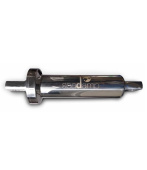
1-2 weeks delivery time The Seares Seadamp HEAVY series is a range of patented hydraulic mooring shock absorbers developed for large yachts, superyachts and commercial vessels from 70 to 400 tons displacement. Manufactured from ultra-high-strength stainless steel and utilizing advanced hydraulic damping technology, these units absorb up to 90% of peak mooring loads, significantly reducing vibration, shock forces and stress on mooring lines and dock hardware. The series delivers quiet operation, outstanding stabilization and long-term reliability in demanding marine environments.
|
$ 5,674.74
Item:
| ||
|
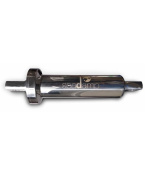
1-2 weeks delivery time The Seares Seadamp HEAVY-X series is a premium range of patented hydraulic mooring shock absorbers engineered for very large yachts, commercial ships and vessels from 500 to 700 tons displacement. Constructed entirely from stainless steel, these hydraulic dampers reduce loads on mooring ropes and fairleads, extend equipment life, and deliver exceptionally quiet, safe and comfortable mooring. The system features a 125 mm hydraulic stroke, breaking loads up to 370,000 N, and can be fully customized for demanding marine installations.
|
$ 14,172.21
Item:
| ||
|
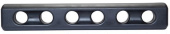
1-2 weeks delivery time U-Rope shore fastening rubber range designed for use with ropes from 8 mm to 16 mm in diameter. Three sizes are available: Type 1 for 8-10 mm rope, Type 2 for 12-14 mm rope and Type 3 for 14-16 mm rope, providing a secure fastening solution matched to the selected rope diameter.
|
$ 13.86
| ||
How does a mooring buoy work with anchor chain, rope, and shackles to secure a boat in a marine mooring system?
A mooring buoy works by connecting the boat to a secure anchor on the bottom through a chain, rope, and shackles, while a heavy concrete block or other anchoring system keeps the entire mooring equipment firmly in place. The buoy remains on the surface of the water, allowing the vessel to be safely secured from the bow while accommodating changes in tide, wind, and wave conditions.
This type of marine mooring system is widely used for boats, ships, and jet skis, providing reliable holding without requiring continuous anchoring and helping reduce movement around the mooring location.
What are the advantages of using stainless steel hardware in boat mooring systems at docks and pontoons?
Stainless steel hardware offers excellent corrosion resistance, high mechanical strength, and long-term durability, making it ideal for boat mooring systems exposed to constant moisture, saltwater, and changing weather conditions. Components such as shackles, rings, and connectors help maintain secure connections between docks, pontoons, mooring lines, and other critical mooring equipment.
Its durability also reduces maintenance requirements while providing dependable performance under repeated loading, helping keep vessels safely secured throughout extended marine use.
What properties make nylon and polyester rope suitable for use with mooring balls and permanent marine mooring systems?
Nylon and polyester ropes are widely used with mooring balls and permanent marine mooring systems because they combine high strength, durability, and excellent resistance to moisture, abrasion, and harsh marine conditions. Nylon provides effective shock absorption under changing loads, while polyester offers low stretch and excellent dimensional stability, making both materials well suited for long-term use with concrete block moorings.
Together, these rope types help keep vessels securely positioned while reducing wear on the overall mooring system and supporting reliable performance in varying weather and water conditions.