
Marine ropes and lines are essential for docking, anchoring, towing, mooring, and sailboat rigging. Available in nylon, polyester, polypropylene, Dyneema®, and traditional manila constructions, they include double braid, solid braid, 3-strand twisted, hollow braid, and 16-strand braided designs.
|
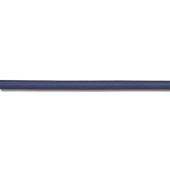
1-2 weeks delivery time Trem Color elastic shock cord with a rubber core covered by polyester multifilament braid. Supplied in solid yellow, red or blue, the range is available in Ø5 mm and Ø6 mm diameters, all on 100 m reels. Designed for general marine and utility applications requiring elastic tensioning with a durable outer cover.
|
$ 167.64
Diameter, mm:
Color:
Item:
| ||
|
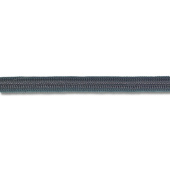
1-2 weeks delivery time Trem black shock cord with an internal rubber core covered by polyester multifilament braid. Designed for elastic fastening and general marine or utility use, the range is available in Ø3-8 mm diameters, all supplied on 100 m reels. Reel weights range from 0.80 to 4.50 kg depending on diameter.
|
$ 109.43
Diameter, mm:
Color:
Item:
| ||
|
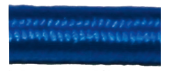
1-2 weeks delivery time Allpa Allcord-10 is a multifilament shock cord with a Polyester HT cover, supplied on 100 m reels and available in 4, 6, 8 and 10 mm diameters. The range includes Blue, Yellow, Red, Black and White with Blue Tracer Thread variants, providing multiple size and color options for elastic securing and fastening applications.
|
$ 70.97
Diameter, mm:
Color:
Item:
| ||
What is the difference between nylon rope, polyester rope, and polypropylene rope in marine use?
Nylon rope is valued for its strength, elasticity, and shock absorption, making double braid nylon, twisted nylon, and solid braid nylon popular choices for dock lines, mooring rope, nylon anchor line, and anchor rode applications. Due to its water absorption properties, nylon performs exceptionally well for docking your boat and securing rope for anchors in demanding marine environments and saltwater conditions.
Polyester rope offers lower stretch and excellent UV resistance, making it a reliable sailing rope, running rigging, and general rope for boating where dimensional stability is important. Compared to nylon and polyester combinations, polyester maintains strength when wet and is commonly used for dock ropes and cordage exposed to long-term weathering.
Polypropylene rope is lightweight, inexpensive, and naturally buoyant, allowing hollow braid polypropylene and floating rope constructions to remain on the water's surface. This makes it suitable for tow rope, utility rope, utility cord, and some boating and marine tasks, although it generally provides lower abrasion resistance and durability than nylon or polyester options.
What factors should be considered when selecting a marine rope for docking and mooring a boat?
When selecting boat ropes for docking and mooring, the most important factors include boat size, rope construction, strength, stretch characteristics, and expected environmental loads. Nylon dock lines, double-braided nylon dock rope, braided rope, and traditional 3 strand rope are commonly chosen because they provide reliable shock absorption and durability.
For areas exposed to constant movement, a bungee dock line or bungee shock cord can help reduce stress on cleats and fittings. Low stretch materials, including advanced fiber options such as Dyneema, are often preferred for specialized applications, while nylon dock rope remains a popular choice for everyday mooring duties.
What are the main differences between double braid, solid braid, and 3 strand rope constructions?
Double braid rope features a braided core protected by a braided outer cover, providing excellent strength, flexibility, and durability for dock line, mooring rope, anchor line, and sailing rope applications. It is one of the most popular choices for marine cordage because it handles abrasion well and remains easy to handle.
Solid braid rope has a tightly woven construction without a separate core, making it smooth, flexible, and suitable for utility rope and lighter-duty boating tasks. Traditional 3 strand rope consists of three twisted strands and offers good elasticity, making it a common option for nylon dock lines, nylon anchor line, rope for anchors, and general docking and mooring use.
What are the primary uses of a dock line and mooring rope in everyday boating operations?
A dock line and mooring rope are primarily used to secure a boat safely to a dock, pier, buoy, or other fixed structure while loading, unloading, or remaining stationary. For any boater, these lines help control vessel movement caused by wind, waves, currents, and passing traffic, reducing stress on the boat and its fittings.
Properly selected and maintained mooring lines also improve safety during everyday boating operations by keeping the vessel stable and preventing unwanted drifting or contact with nearby objects.