
ICOM Marine VHF radios are communication systems designed to provide reliable voice communication and enhance safety on the water. Available as fixed-mount, handheld, and black box VHF marine transceivers, they support clear ship-to-ship and ship-to-shore communication, emergency calls, and navigation coordination. Built for demanding marine environments, they deliver dependable performance with high transmit power and durable, waterproof construction.
|
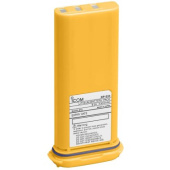
1-2 weeks delivery time Icom BP-234 non-rechargeable lithium metal battery for the portable VHF IC-GM1600E / GM1600E. The battery provides 9V and 3300mAh capacity and is intended for marine communication applications in accordance with GMDSS regulations.
|
$ 350.08
-
+
| ||
How does a marine VHF radio transceiver with DSC and built-in GPS improve communication between vessels and shore stations?
A marine VHF radio transceiver with built-in Class D DSC and built-in GPS enables rapid emergency alerts with precise position information while providing reliable communication between vessels, shore stations, and rescue services over dedicated marine channels. Available as fixed-mount, handheld, and black box VHF radio systems, these marine radios support communication and safety for both commercial and recreational boaters with clear audio, digital selective calling, and dependable performance in demanding marine environments.
By combining high-performance electronics, intuitive controls, and flexible communication options, modern marine VHF radios help crews maintain situational awareness, coordinate operations, and communicate confidently on the water.
What is the purpose of an AIS receiver in an ICOM marine VHF radio transceiver?
An AIS receiver in an ICOM marine VHF radio transceiver displays the identity, position, course, and speed of nearby vessels, improving situational awareness and helping crews make safer navigation decisions. Whether integrated into a fixed mount unit or paired with a handheld VHF radio, it enhances communication, collision avoidance, and overall marine safety, while transmit watt output helps provide reliable communication over marine channels.
By combining VHF communication and AIS functionality in a single system, it reduces equipment complexity and delivers efficient operation for both recreational and professional boating.
What are the advantages of a compact ICOM VHF marine transceiver compared with a handheld VHF radio on smaller boats?
A compact ICOM VHF marine transceiver provides the performance of a fixed-mount marine radio while occupying minimal console space, making it ideal for pleasure boats where space is limited. Compared with a handheld VHF radio, it typically offers higher transmit power, improved range VHF communication, continuous power from the vessel, clearer audio with features such as active noise cancellation, and convenient access to dedicated weather and marine channels, making it a dependable part of modern marine equipment.
While handheld radios are valuable as portable backup devices, fixed-mount ICOM radios provide greater communication range and continuous operation, complementing other marine products for enhanced onboard safety. Unlike a general mobile radio or land-based two-way radios, they are specifically designed for marine communication, giving boaters greater peace of mind on the water.
Why is a VHF air band radio not suitable for marine communication compared with a fixed-mount marine VHF radio?
A VHF air band radio is designed for communication with aircraft and air traffic services, while a fixed-mount marine VHF radio is specifically built for ship-to-ship and ship-to-shore communication on dedicated marine channels. Marine VHF systems support features such as DSC, AIS integration, external GPS connectivity, and reliable operation in harsh marine environments, making them the correct choice for safe navigation and emergency communication.
Unlike mobile ham, UHF, or other land-based communication systems, marine VHF radios operate on internationally recognized marine frequencies and are optimized for dependable communication at sea.