
Marine anodes, including zinc, aluminum, and magnesium anodes, are sacrificial metal components used to protect the hull and underwater metal parts of boats and yachts from galvanic corrosion. By corroding preferentially, the anodes help protect more valuable submerged components such as hull fittings, propeller shafts, rudders, trim tabs, and other bonded metal parts.
|
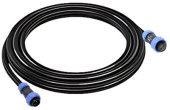
1-2 weeks delivery time BPS Marine 15' Signal Cable Extension is a shielded cable designed to carry the ultrasonic signal between a BPS Marine ultrasonic transducer and the control module. The 15 ft cable can be used either to connect a transducer to the controller or to extend an existing transducer signal cable.
|
$ 51.85
-
+
| ||
How do Aluminum, Zinc, and Magnesium Anodes differ in protecting a boat?
Aluminum, zinc, and magnesium anodes all provide cathodic protection by acting as sacrificial metals, but their effectiveness depends on the water type and their electrochemical potential. Zinc anodes are traditionally used in saltwater and provide reliable protection in high-salinity environments. Aluminum anodes are more electrochemically active than zinc and offer a higher protective capacity for their weight, making them suitable for saltwater and brackish water and, with the correct alloy, many freshwater applications. Magnesium is the most active of the three materials and is primarily intended for freshwater, where its higher driving voltage provides effective protection in low-conductivity conditions. Magnesium anodes should generally not be used in saltwater or brackish water, as they may provide excessive protection and be consumed too rapidly.
Why is anode placement on the hull plate important for effective corrosion protection?
Correct anode placement is essential because sacrificial anodes must be electrically connected to the metal they protect and positioned where protective current can reach exposed underwater surfaces effectively. On metal hulls, anodes should be distributed around areas that are most susceptible to galvanic corrosion, including the hull plating, rudder, propeller shaft, stern gear, and other submerged metal components. Poorly positioned, undersized, or electrically isolated anodes may leave parts of the structure insufficiently protected. Proper distribution helps maintain a more uniform protective potential across the underwater metalwork and reduces the risk of localized corrosion.