
Boat anchors are essential components of a vessel’s anchoring system, designed to secure the boat by gripping the seabed and resisting movement caused by wind, waves, and current. Different anchor designs are suited to different boat sizes, seabed conditions, and operating requirements. Anchor chains work together with boat anchors by adding weight to the rode, helping maintain a lower pulling angle and improving overall holding performance. The category includes boat anchors, anchor chains, and related anchoring components for recreational and professional marine use.
|
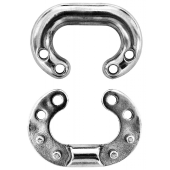
1-2 weeks delivery time The AISI 316 Stainless Steel Quick Link range is designed for calibrated anchor chains and provides a strong, secure connection with enhanced resistance under load. Manufactured from marine-grade AISI 316 stainless steel, each quick link features an 8-pin locking design for increased strength and durability. Available in diameters from 6 mm to 12 mm, these quick links are suitable for demanding marine anchoring applications.
|
$ 3.08
Diameter, mm:
| ||
|
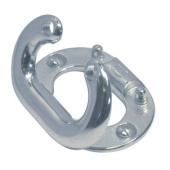
1-2 weeks delivery time The Euromarine A4 Rivet Quick Link range is manufactured from marine-grade A4 stainless steel and provides a compact, high-strength solution for joining chains and rigging components. Designed with a riveted construction for improved reliability, these quick links are available in diameters from 5 mm to 10 mm, with breaking loads from 500 kg to 2,000 kg, making them suitable for a wide variety of marine and industrial applications.
|
$ 5.68
Diameter, mm:
| ||
|
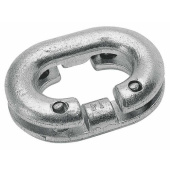
1-2 weeks delivery time The Plastimo Galvanised Steel Chain Joining Link is designed to connect two lengths of anchor chain with the same diameter without increasing chain thickness or causing blockage in the windlass gypsy. Manufactured from galvanized steel for corrosion resistance, these joining links are supplied in packs of two and are available for 6 mm and 8 mm chains. They are intended for temporary chain connections, as their safe working load is lower than that of an equivalent chain link.
|
$ 13.24
Diameter, mm:
| ||
|
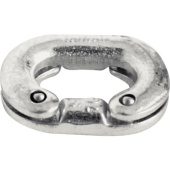
1-2 weeks delivery time The Plastimo Stainless Steel Chain Joining Link is designed to connect two lengths of anchor chain with the same diameter without increasing chain thickness or causing blockage in the windlass gypsy. Manufactured from corrosion-resistant stainless steel, these joining links are supplied in packs of two and are available for 6 mm, 8 mm, 10 mm and 12 mm chains. They are intended for temporary chain connections, as their safe working load is lower than that of an equivalent chain link.
|
$ 13.45
Diameter, mm:
| ||
|
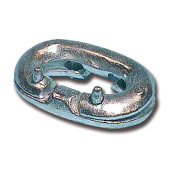
1-2 weeks delivery time The Trem Chain Quicklink series is manufactured from corrosion-resistant AISI 316 stainless steel for secure and durable chain connections in marine environments. These particularly strong quicklinks are available in 6 mm, 8 mm and 10 mm sizes, combining compact dimensions with high mechanical strength for anchoring, mooring and general rigging applications.
|
$ 3.31
Diameter, mm:
| ||
|
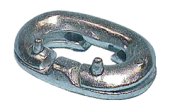
1-2 weeks delivery time The Allpa Galvanized Emergency Chain Connector range provides a practical solution for temporary chain repairs and emergency chain connections. Manufactured from galvanized steel for corrosion resistance, these connectors are available in 6 mm, 8 mm, 10 mm and 12 mm sizes, making them suitable for a wide range of anchoring and mooring chain systems.
|
$ 4.42
Diameter, mm:
| ||
What are the different types of boat anchors and their specific uses?
Boat anchors are available in several designs, each suited to different seabed conditions and vessel types. Fluke anchors are commonly used in sand and mud, while grapnel anchors are compact and practical for small boats, tenders, kayaks, and other lightweight craft. Heavier traditional or plow-style anchors may be better suited to larger vessels or mixed seabed conditions. Choosing the right anchor depends on boat size, seabed type, expected wind and current, and the required holding power.
What are the main benefits of fluke-style boat anchors?
Fluke-style boat anchors are designed to dig into soft seabeds such as sand and mud, providing strong holding power relative to their weight. Their lightweight and compact design makes them easy to handle and store, which is especially useful on smaller boats. When correctly sized and used with suitable chain and rode, a fluke anchor can provide reliable holding for recreational anchoring in appropriate bottom conditions.
What are the main components of a boat anchoring system?
A typical boat anchoring system includes the anchor, anchor chain, and rope or other rode connecting the anchor to the vessel. The anchor grips the seabed, while the chain adds weight and helps maintain a lower pulling angle to improve holding performance. Shackles, swivels, connectors, and storage equipment may also be used depending on the installation and vessel type.